15 Unique Things to Do in Ho Chi Minh City
Make a rug, learn Vietnamese coffee recipes or explore the city through art, food and river journeys. These 15 experiences distinguish central stops from excursions and help you choose a realistic itinerary.
· Tuft Saigon
Looking for unique things to do in Ho Chi Minh City? Choose experiences that let you make, notice or learn something, rather than simply collect landmark photographs. A coffee lesson, a careful look at Vietnamese art or a river journey can each reveal a different side of Saigon.
These 15 ideas mix central stops with wider-city outings and two excursions. The suggested time blocks are planning recommendations unless a workshop duration is specified. Leave room for transfers, meals and changing weather rather than trying to complete the entire list.
This guide is published by Tuft Saigon, which runs the rug-tufting option below.
1. Tuft a personal rug at Tuft Saigon
Central studio session: three to four and a half hours. At Tuft Saigon, you use a tufting gun to make your own rug, with equipment, yarn, materials and instructor guidance included. Beginners need no experience. Bring a simple reference, such as a bold flower or initials, rather than a detailed portrait.1

A handmade tiger and dragon rug beside yarn and wooden frames at Tuft Saigon.
Photo: Tuft Saigon
Choose this if you want sustained hands-on time instead of another sightseeing stop. Check the beginner-friendly design guide, then use the size and booking advice below. Confirm collection before departure, not after your session.
2. Learn Vietnamese coffee-making at Lacàph
Central workshop: 90 minutes for the shorter formats. Lacàph’s Fun and Easy Vietnamese Coffee Workshop involves making three Vietnamese coffees and enjoying a bánh mì dessert.2 Its egg-coffee workshop focuses on phin coffee with egg cream and also lasts 90 minutes.

Vietnamese coffee with a phin filter and a separate glass of ice, photographed in 2006. This is an illustration of coffee preparation, not Lacàph's workshop.
Photo: Mike Verdone · Wikimedia Commons · Viet-coffee · Public domain · Resized for the web.
Choose either for a practical skill without committing most of the day. For broader coffee culture, Hands-on Discovery includes brewing two blends and tasting coffee with sweets. Its listing gives two and a half hours but the copy also says two, so confirm the booked duration.
The official experience and booking hub places the Coffee Experiences Space at 220A Nguyễn Công Trứ, Bến Thành Ward, in central Ho Chi Minh City; individual listings use 220 Nguyễn Công Trứ, District 1. Confirm the entrance before travelling. The official listings state that the space is not wheelchair accessible and does not allow pets. Ask about ingredients if you avoid dairy. Save ordinary café hopping for another day so the experiences feel different.
3. Cook Vietnamese dishes at Hoa Túc Cooking Class
Central cooking experience: 90 minutes to four hours, depending on format. At Hoa Túc Cooking Class, the 90-minute Express Cooking Experience means preparing and eating one selected Vietnamese dish. The three-hour Hands-On Cooking Class offers step-by-step cooking with a local chef, followed by eating the dishes you make. Choose the four-hour Half-Day Gourmet Trip for a guided ingredient visit to Tân Định Market before cooking and a meal.3
The official class overview offers booking venue choices at 74/7 Hai Ba Trung, Saigon Ward and 29 Ngo Thoi Nhiem, Xuan Hoa Ward, both in Ho Chi Minh City. Confirm which meeting point applies to your class; do not plan transfers around the restaurant name alone. Dietary requirements can be accommodated with advance notice.
Pick Express for a short introduction, Hands-On for a longer cooking session, or the market option if ingredient shopping interests you. The market visit is not an entirely indoor activity. Confirm the menu and availability when booking rather than assuming every format runs on your chosen date.
4. Explore the small businesses inside Apartment 42
Central stop: allow 60 to 90 minutes. At 42 Nguyễn Huệ, a former residential block has become a collection of cafés, boutiques and shops. The appeal is exploring several independent spaces inside one building rather than visiting a single destination café.4
Choose somewhere to sit, then browse at an unhurried pace. Businesses change, so use the current signs rather than an old floor-by-floor directory. Respect any private or restricted areas and ask before photographing interiors.
5. Read the historic maps inside the Central Post Office
Central stop: allow 30 to 45 minutes. The Central Post Office contains historic wall maps and rows of wooden telephone booths, details that reward a closer look beyond its familiar façade.5
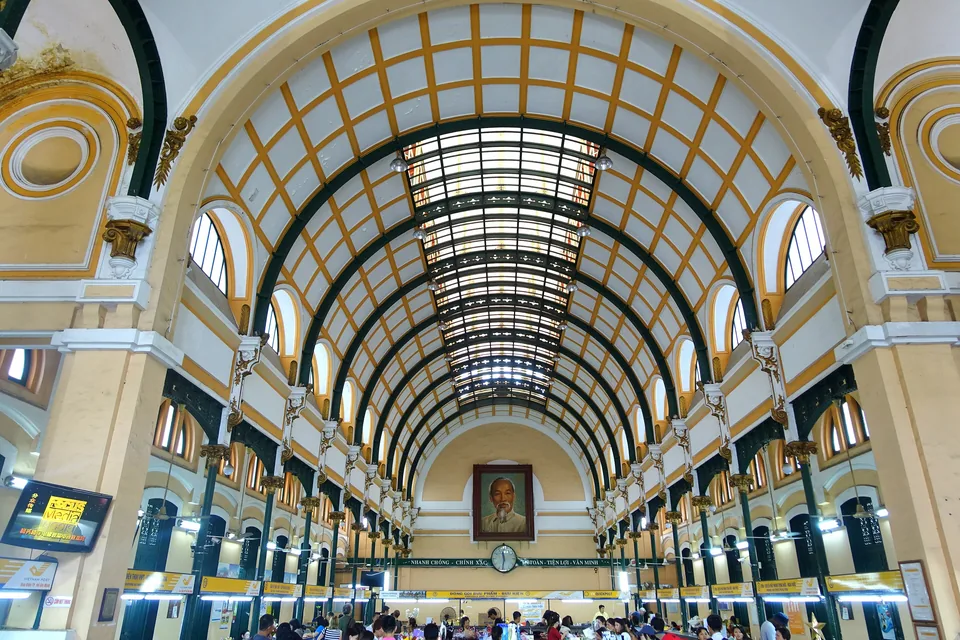
The vaulted interior of Saigon Central Post Office, photographed in 2014.
Photo: Daderot · Wikimedia Commons · Interior of Saigon Central Post Office - Ho Chi Minh City, Vietnam - DSC01153 · CC0 1.0 · Resized for the web.
Make this a short architecture stop: compare the maps with your present-day route and notice how the interior is organised. It pairs naturally with a central walking day. Keep circulation routes clear and follow staff guidance in this working building.
6. Look closely at Vietnamese art materials
Central museum visit: allow 90 minutes to two hours. The Ho Chi Minh City Fine Arts Museum displays Vietnamese paintings, sculptures and ceramics, with works by lacquer artist Nguyễn Gia Trí among its collections. Patterned tiled floors and stained-glass windows also make the building worth noticing.6
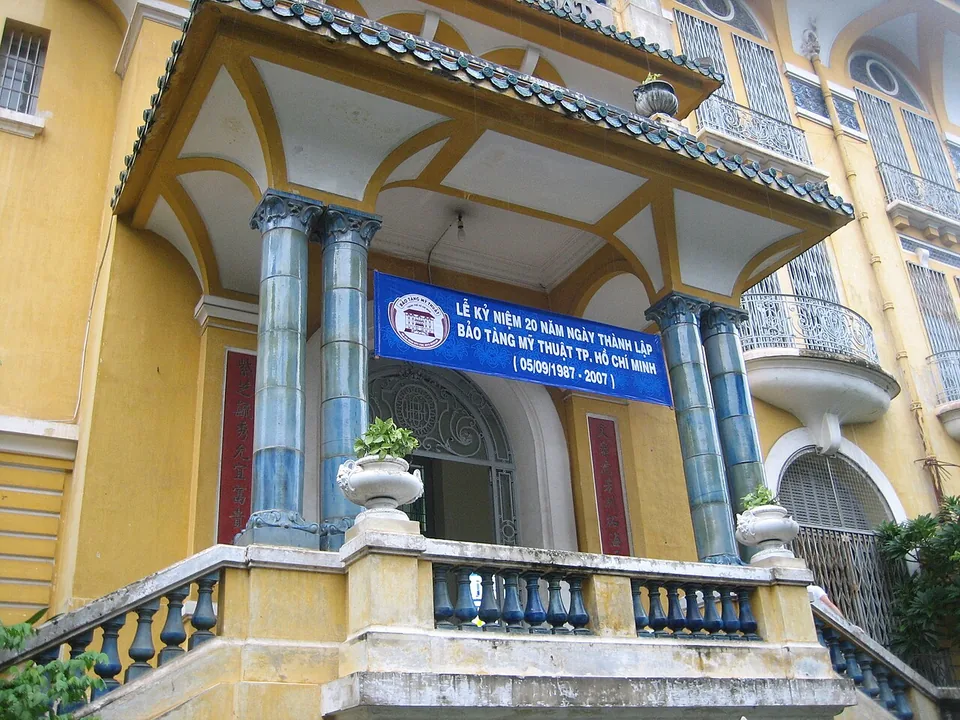
The entrance of the Ho Chi Minh City Fine Arts Museum, photographed in 2007.
Photo: thalling55 · Wikimedia Commons · Museum of Fine Arts, HCMC · CC BY 2.0 · Resized for the web.
Instead of rushing through every room, choose a material or theme to follow. Look at how colour and texture change between works. Observe the museum’s photography rules rather than assuming every gallery permits pictures.
7. Explore Independence Palace through its design
Central heritage visit: allow 90 minutes to two hours. Independence Palace, also called Reunification Palace, was designed by architect Ngô Viết Thụ. Visitors can explore meeting rooms and the former command centre in the basement.5
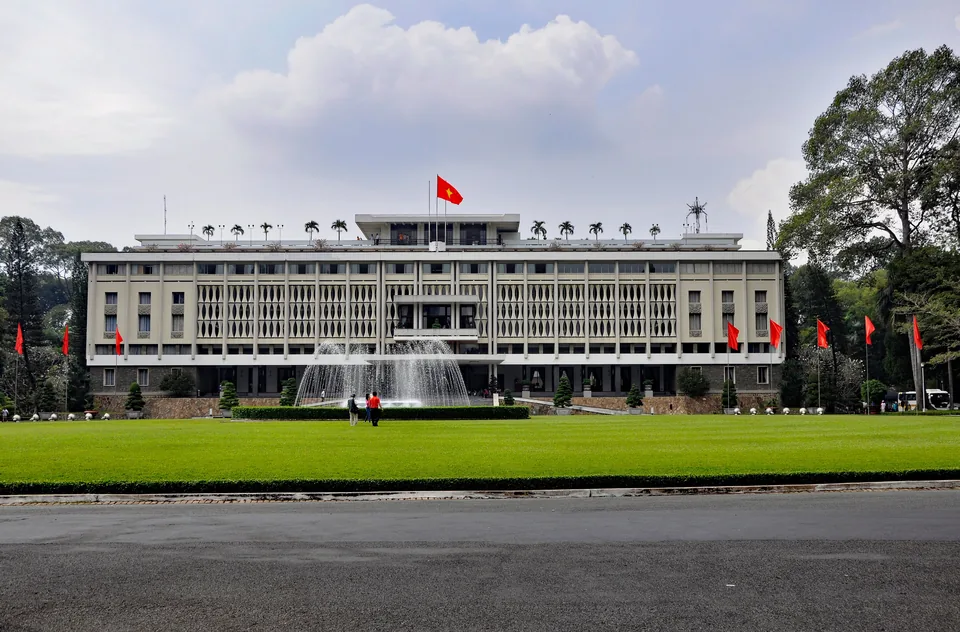
Independence Palace in Ho Chi Minh City, photographed in 2015.
Photo: P. Hughes · Wikimedia Commons · Ho Chi Minh City - Independence Palace · CC BY 4.0 · Resized for the web.
Treat it as both an architectural visit and a history lesson. Notice the contrast between formal reception spaces and functional wartime rooms. Read the interpretation as you go, and check current visitor access before building a tightly timed itinerary around particular areas.
8. Discover traditional medicine at FITO Museum
City museum visit: allow 60 to 90 minutes plus transfers. FITO Museum focuses on traditional Vietnamese medicine, offering a different subject from the city’s better-known war and political-history museums.7
Choose it if specialist collections interest you. Approach the displays as cultural and historical interpretation, not personal medical advice. Check current visitor information before travelling, particularly if you hope to join a guided explanation rather than explore independently.
9. Combine commerce and temple culture in Chợ Lớn
Neighbourhood outing: reserve half a day. Chợ Lớn, the city’s Chinese quarter, combines Bình Tây’s wholesale trading activity with Thiên Hậu Pagoda, a temple dedicated to the goddess of the sea.4
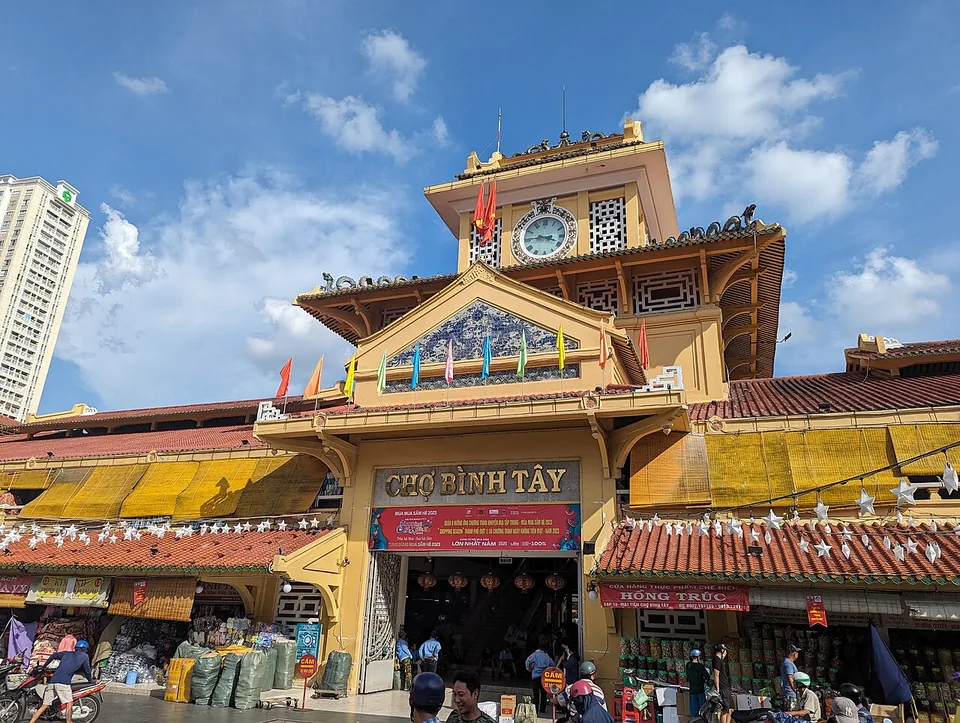
Bình Tây Market in Chợ Lớn, photographed in July 2023.
Photo: Syced · Wikimedia Commons · Binh Tay market 19 · CC0 1.0 · Resized for the web.
The contrast makes this more rewarding than a shopping-only trip. Observe how goods are traded, then slow down at the temple. Dress respectfully, avoid interrupting worship and ask permission before photographing people. Do not expect a wholesale market to operate like a souvenir shop.
10. Watch the city wake up at Tao Đàn Park
Early-morning city stop: allow 45 to 60 minutes. Vietnam’s national tourism guide describes morning exercise, conversation and games beneath the trees at Tao Đàn Park.7
Go for a gentle walk and observe without turning people’s routines into a performance for your camera. This is a good counterpoint to structured tours or workshops. Keep the rest of your morning flexible rather than expecting a scheduled cultural event or guaranteed activity.
11. See the city from Saigon Waterbus
City river outing: reserve a flexible half-day block. Saigon Waterbus serves Bạch Đằng and other river stops, including Thanh Đa and Linh Đông, giving you a view of the city from the water.8
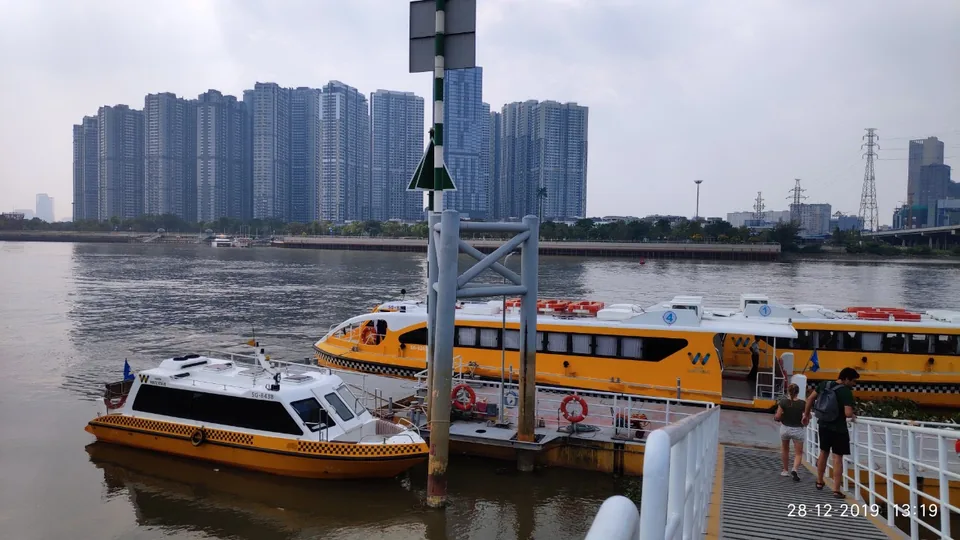
Saigon Waterbus boats at Bình An station, photographed on 28 December 2019.
Photo: Pk.over · Wikimedia Commons · Bus in the Binh An station · CC0 1.0 · Resized for the web.
For a central starting point, check the Bạch Đằng station details at 10B Tôn Đức Thắng. The operator’s pages use differing ward wording, so confirm the current station directions before travelling.
Check the operator’s current departure information by selecting departure and arrival stations, date and seats. In that official booking flow, tickets are one-way, so a return needs a separate booking; the terms state that tickets are non-refundable and non-cancellable. Compare available outward and return services before deciding what to do at your destination, not after arriving there.
This is city transport, not a Mekong Delta excursion. The half-day block allows for waiting and exploring ashore, not a verified time on board. Waiting time matters as much as sailing time, particularly when another appointment follows.
12. Watch Lune Production’s A O Show at Saigon Opera House
Central evening plan: follow the ticketed performance time. Lune Production lists A O Show at Saigon Opera House in Ho Chi Minh City under its Vietnamese Bamboo Circus genre.9
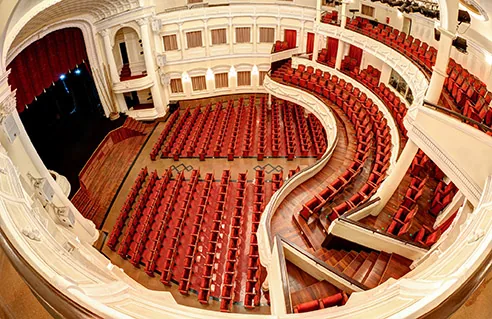
The auditorium of Saigon Opera House, photographed in 2016. This shows the venue, not an A O Show performance.
Photo: Vinhphat1808 · Wikimedia Commons · LUNE Saigon Opera House 02 · CC BY-SA 4.0 · Resized for the web.
Choose this for a performance-led evening rather than a nightlife crawl. Use Lune Production’s official booking page to check the programme and tickets for your exact date, then allow time for arrival before the show. Do not assume it runs nightly or that tickets will be available after you arrive. Confirm the performance booking before setting dinner and transfer plans; keep the rest of the evening flexible until then.
13. Make Vĩnh Khánh a shellfish-focused dinner
Neighbourhood evening: allow around two hours. Vĩnh Khánh is known for seafood and snail dining, with preparations including butter and garlic, chilli and sea salt, or coconut milk.10
Make the experience about comparing cooking styles rather than ordering unfamiliar dishes at random. Ask what each item is and confirm the price and portion before ordering. Travellers with shellfish allergies should choose another activity; do not assume sauces or shared cooking equipment are suitable.
14. Take a history excursion to Củ Chi
Outlying excursion: reserve at least half a day, often longer with transfers. Củ Chi’s wartime tunnel sites are on the north-western outskirts of greater Ho Chi Minh City. Bến Đình and Bến Dược are separate visitor options, not central-city attractions.5
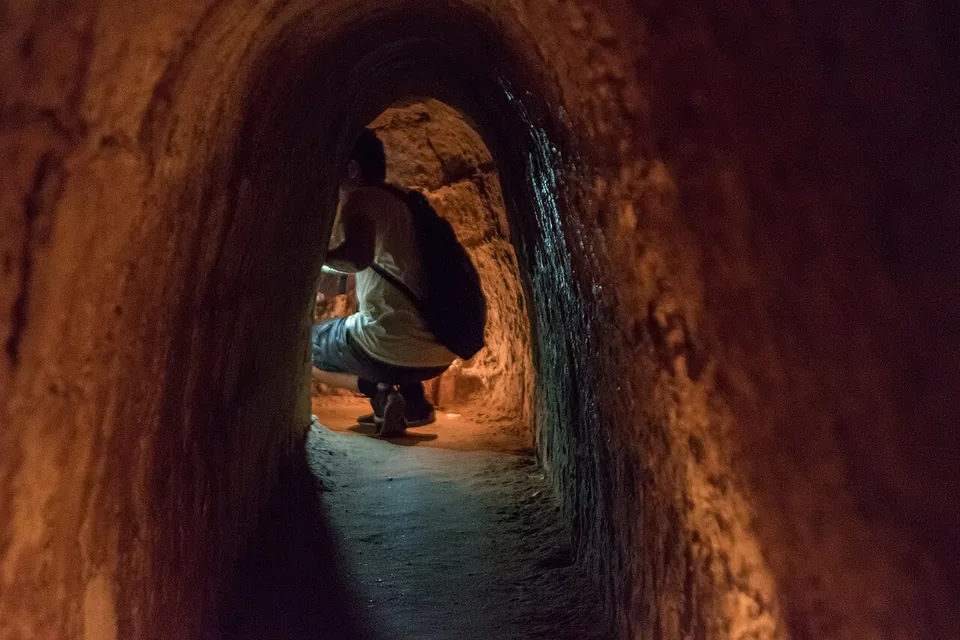
A narrow passage at Củ Chi, photographed in 2017.
Photo: dronepicr · Wikimedia Commons · Small Cu Chi Tunnel Vietnam (39543852401) · CC BY 2.0 · Resized for the web.
Choose the site and transport arrangement before booking. Ask about the underground sections if confined spaces concern you, and check which above-ground interpretation is included. Avoid squeezing this between two fixed central appointments.
15. Plan an ecology-focused day in Cần Giờ
Coastal excursion: keep a full day free. Cần Giờ’s UNESCO biosphere reserve lies south-east of Ho Chi Minh City and includes mangroves, wetlands, salt marshes and mudflats.11
Choose an itinerary that explains the habitat, not one promising wildlife encounters. Confirm transport, visitor access and any boat activities with the operator. This is a nature day outside the central sightseeing area. Bring suitable sun and rain protection, and do not feed or approach wildlife.
Choosing Tuft Saigon for your city itinerary
Tufting makes sense when you want a substantial creative session and can plan collection. The studio is at 2/3A Nguyễn Thị Minh Khai Street, Saigon Ward, District 1. Start with the 20×20 cm workshop if you want the shortest option: ₫350,000 per person, three hours, with hourly starts from 10:00 to 16:00.1
The 30×30 cm session costs ₫500,000 per person for four hours, with hourly starts from 10:00 to 15:00. The 40×40 cm session costs ₫690,000 per person for four hours 30 minutes, with hourly starts from 10:00 to 14:00. The first-workshop rug-size guide helps match ambition to canvas size.1
Workshops run Tuesday to Sunday, with Mondays and Vietnamese public holidays closed. Weekend online bookings require at least 48 hours’ notice. Tuesday-to-Friday online booking closes at 18:00 on the previous day and stays closed on the session day. All times are Vietnam time. There are eight shared stations across sizes and overlapping sessions, not eight for each size.1
Book through the workshop booking page. No deposit or online card payment is required; pay by cash or VietQR on arrival. Bring a manageable design and arrive five to ten minutes early. Read the before-you-arrive checklist, especially if you need parking guidance. Motorbike parking is available on request.
The instructor confirms finishing, drying and collection arrangements. Same-day take-home is not guaranteed. If departure is close, discuss collection first on WhatsApp. Last-minute availability can be discussed there too, but it is not guaranteed and does not reopen same-day online booking.
Frequently asked questions
Which experiences fit a short stay?
Choose one substantial session, one nearby cultural stop and an evening activity. For example, book a three-hour rug workshop and leave the evening flexible. Save Củ Chi or Cần Giờ for a separate day rather than trying to add an excursion to a packed central itinerary.
What should I choose when it rains?
Consider tufting, coffee-making, cooking or a museum. Apartment browsing still involves getting between venues, while parks, river journeys and mangrove excursions are not fully indoor alternatives. Allow extra transfer time and check any weather-related changes with the operator.
Is tufting suitable for children?
Tuft Saigon accepts participants aged 16 or older. Ages 12 to 15 require adult supervision, and under-12s are not permitted in the workshop area. Food and drink are not permitted there either. Check the studio terms before booking for younger teenagers.
References
- 1. Tufting Workshops in Saigon
- 2. Vietnamese Coffee Experiences at Lacàph
- 3. Cooking Class by Hoa Túc
- 4. Ho Chi Minh City: Vietnam Tourism
- 5. 7 must-see attractions in HCMC
- 6. The Ho Chi Minh City Fine Arts Museum: Enchanting Beauty Captivating Hearts
- 7. The perfect weekend in HCMC
- 8. Saigon WaterBus
- 9. Lune Production: Vietnamese Culture Shows
- 10. Eating like a local in Ho Chi Minh City
- 11. Can Gio mangrove: UNESCO Man and the Biosphere Programme